It’s 8:30 on a Monday morning in Edmonton. Employees are coming through the front doors, delivery drivers are wheeling carts across the lobby, and the entrance mats are already soaked.
Outside, there’s snow, slush, and that gritty sand left behind after the roads were treated. Inside, muddy footprints stretch from the entrance to the elevators.
Sound familiar?
Winter commercial floor cleaning in Edmonton involves frequent entrance inspections, prompt removal of moisture and grit, suitable matting, and floor care adjusted to weather and building traffic.
Property managers should pay extra attention to busy entrances during snowfall and thaw conditions rather than relying on the same cleaning schedule year-round.
A cleaning schedule that worked perfectly in September might struggle by the first major snowfall.
You don’t necessarily need to overhaul your entire cleaning program, though. A few practical changes to entrance matting, daily floor care, and cleaning frequency can make a noticeable difference.
Here’s how to build a winter floor maintenance plan that works for your property.
Why Do Edmonton Commercial Floors Get So Dirty in Winter?
Snow is only part of the problem.
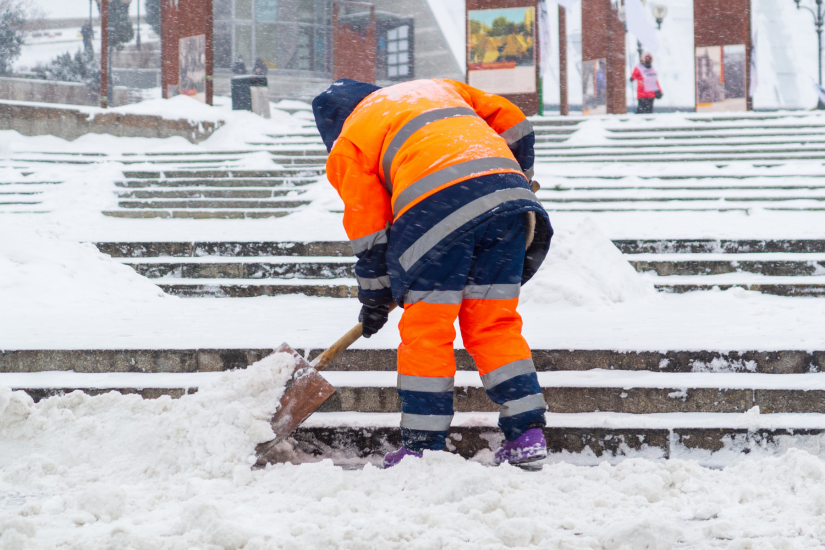
Edmonton winters bring freezing temperatures, icy sidewalks, blowing snow, and plenty of sand and de-icing products. All of that eventually finds its way inside commercial buildings.
Some days, the entrance stays relatively dry. Other days, one busy morning can leave the lobby looking like it hasn’t been cleaned in a week.
There are a few common reasons for this.
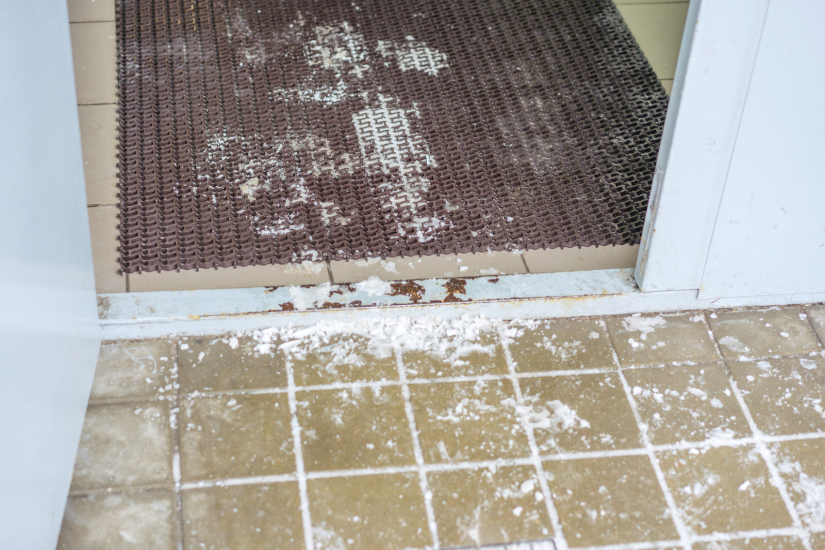
Sand and grit get dragged across floors. Those little particles may not look serious, but they can act like sandpaper under shoes and cart wheels. Over time, they can wear down floor finishes and leave visible scratches.
Melting snow creates slippery spots. Water collects near doors, around mats, and along busy walking routes. If nobody catches it early, people can slip.
De-icing residue leaves a mess. Depending on the products used outdoors, floors may develop white streaks or a dull, cloudy appearance. Regular mopping doesn’t always remove that residue properly.
Foot traffic spreads everything. A busy office tower, medical building, or retail property can have hundreds of people walking through the entrance each day.
And once that dirt reaches the elevators, it’s no longer just an entrance problem.
What Should a Winter Entrance Cleaning Plan Include?
The best approach is to stop as much dirt and moisture as possible before it spreads.
That sounds simple. But it’s surprising how many buildings rely on one small mat inside the front door and expect it to handle an entire Edmonton winter.
It usually won’t.
Start With Proper Entrance Matting
A good entrance matting system should help remove dirt and absorb moisture as people walk into the building.
For busy commercial properties, consider using:
- Exterior scraper mats designed for outdoor conditions
- Interior mats that capture moisture and fine dirt
- Longer walk-off mats in high-traffic entrances
- Additional mats near secondary entrances or loading areas
Mats should sit flat, stay secure, and allow doors to open properly. Curled edges and bunched-up corners can create the very trip hazards you’re trying to prevent.
One more thing: mats need cleaning, too.
A mat that’s completely saturated with water or packed with grit won’t do its job very well. During heavy snowfall, it may need attention several times throughout the day.
Pay Attention to the First Few Metres
The area immediately inside the entrance takes the biggest beating.
That’s where boots release snow, wheels leave dirty tracks, and people stop to shake off their jackets.
For many buildings, this area needs more frequent attention than the rest of the lobby.
A practical routine might include checking the entrance before the morning rush, removing standing water during busy periods, and cleaning again after the lunch crowd.
The exact schedule depends on traffic and weather. A quiet professional office won’t need the same level of attention as a busy medical clinic or shopping centre.
How Often Should Commercial Floors Be Cleaned During an Edmonton Winter?
There’s no single schedule that works for every Edmonton property.
A building with 30 employees and limited visitors has very different needs from a multi-tenant office tower with constant deliveries.
Still, most commercial properties benefit from a combination of daily cleaning, regular inspections, and periodic deeper floor care.
Here’s a practical starting point.
| Cleaning task | Suggested winter frequency |
| Check entrance mats and wet areas | Several times daily during wet or snowy conditions |
| Remove standing water and visible slush | As soon as it’s noticed |
| Dust mop or vacuum tracked-in grit | Daily, or more often in busy areas |
| Damp mop hard floors | Daily, based on traffic |
| Machine scrub suitable hard floors | Weekly or as needed |
| Deep clean carpeted entrance areas | Based on soil buildup and moisture |
| Inspect floor finish and wear | Monthly and after heavy winter traffic |
These are starting points, not fixed rules. Cleaning frequency should increase when conditions get worse.
For example, a sudden warm spell in February can create more indoor moisture than a cold, dry January day. Snow melts faster, people track in more slush, and entrance mats fill up quickly.
That’s when a flexible cleaning schedule pays off.
What Floor Cleaning Methods Work Best for Different Surfaces?
Not every floor should be cleaned the same way.
Using the wrong product or equipment can damage a surface, leave a slippery film, or make an existing problem worse.
Vinyl and Resilient Flooring
Vinyl composition tile (VCT), luxury vinyl tile (LVT), and other resilient flooring are common in offices, schools, and commercial buildings.
These floors often handle heavy traffic well, but grit and winter residue can still cause wear.
Daily dirt removal is important. For floors that require a protective finish, periodic maintenance may also be needed to restore their appearance.
Be careful with harsh chemicals. A cleaner that works on one floor finish may not be suitable for another.
Ceramic and Porcelain Tile
Tile is popular in entrances because it can handle moisture and frequent cleaning.
But don’t forget the grout.
Dirt and residue can settle into grout lines, leaving them darker than the surrounding tile. Regular mopping may clean the surface without removing everything trapped in those lines.
Periodic machine scrubbing with suitable equipment can help, depending on the tile’s texture and condition.
Carpet and Carpet Tiles
Carpet can help capture dirt and moisture, especially in entrance areas.
The downside? It can hold onto both.
During Edmonton’s winter months, heavily used carpeted areas may need more frequent vacuuming and spot cleaning. Wet carpet should also be addressed promptly so moisture doesn’t sit in the backing or spread to nearby materials.
If the carpet smells musty or stays damp long after the morning rush, that’s worth investigating.
Polished Concrete and Stone
Polished concrete and natural stone may look tough, but they still need the right care.
Some cleaning products can affect stone surfaces or leave residue on polished floors.
Use cleaning methods approved for the specific material and finish. If you’re unsure what type of floor is installed, find out before introducing a new chemical.
A little caution can save a fairly expensive repair.
Common Winter Floor Cleaning Mistakes
Most winter cleaning problems don’t happen because nobody cleans the building.
They happen because the cleaning routine doesn’t match the conditions.
One common mistake is waiting until the evening cleaning crew arrives to deal with wet floors.
Imagine a downtown Edmonton office building with hundreds of people coming through the lobby between 8 and 9 a.m. By lunchtime, the mats are soaked and slush has reached the elevator doors.
If the next cleaning isn’t scheduled until 6 p.m., that’s a long time for water and grit to sit on the floor.
Another mistake is using too much cleaning solution.
More soap doesn’t always mean cleaner floors. Excess product can leave residue that attracts dirt or makes surfaces feel tacky.
Using dirty mop water is another issue. Instead of removing winter grime, it can spread it around.
And then there’s the equipment.
A worn-out mop, poorly maintained autoscrubber, or vacuum with reduced suction won’t deliver the same results as equipment that’s properly maintained.
Small things. But they add up.
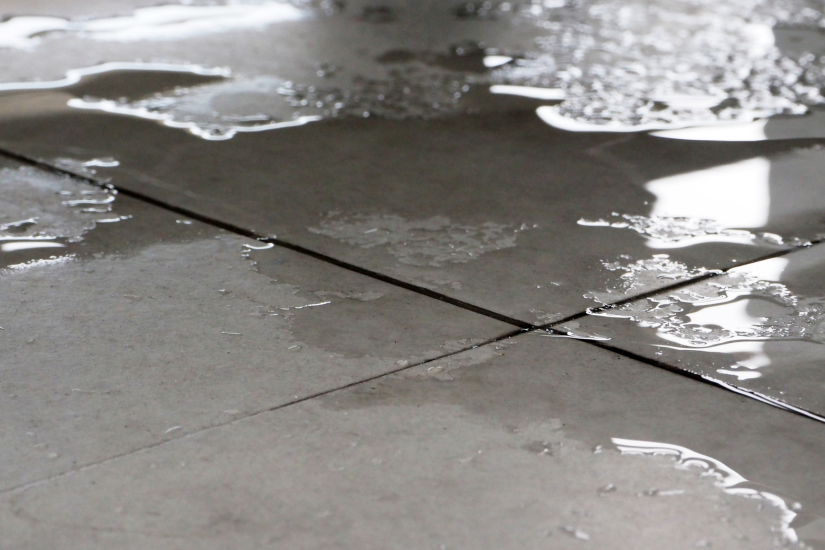
How Can Property Managers Reduce Winter Slip Hazards?
Keeping floors clean is part of managing winter safety, but cleaning alone isn’t enough.
A good plan should also cover how hazards are spotted, reported, and addressed.
Start by identifying areas where water and slush tend to collect.
These often include main entrances, vestibules, elevator lobbies, stairwell doors, and corridors connecting parking areas to the building.
Then make sure someone is responsible for checking those spaces during busy periods.
A few practical steps can help:
- Remove standing water promptly
- Keep entrance mats flat and in good condition
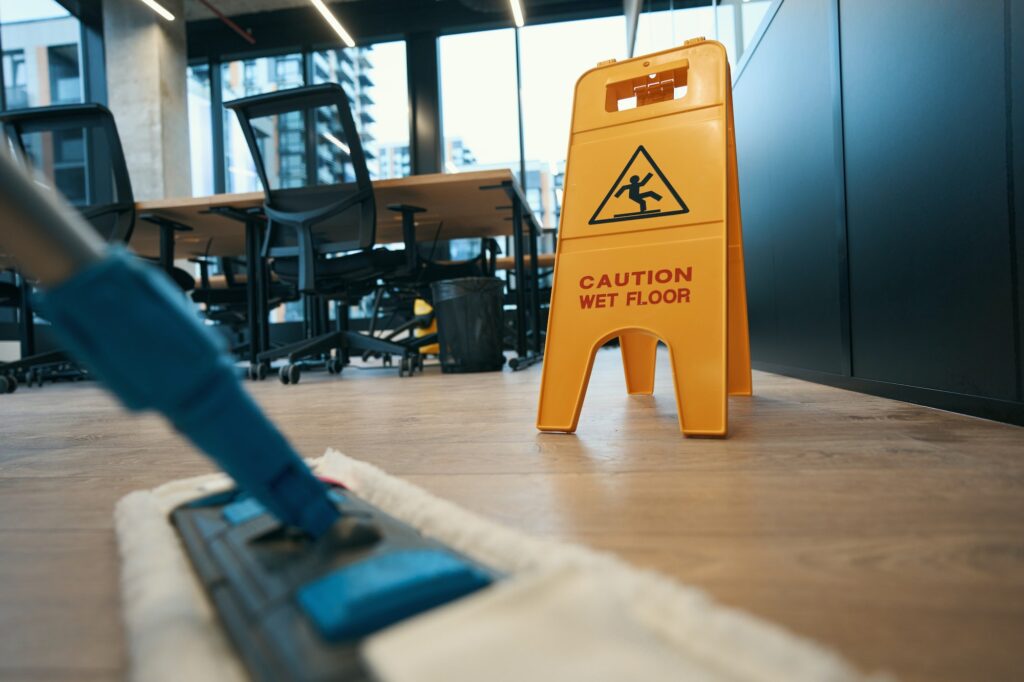
- Use appropriate warning signs while floors are wet
- Check for water around mat edges
- Keep cleaning equipment accessible for quick response
- Record recurring problem areas so they can be addressed
Don’t overlook the exterior entrance, either.
Poor drainage, snow buildup, and uneven ice control outside can make indoor cleaning much harder. Coordinate with the property’s snow and ice maintenance provider so both sides of the entrance are being managed.
The goal isn’t to promise a completely slip-free building. That’s not realistic in an Edmonton winter.
The goal is to reduce avoidable hazards and respond quickly when conditions change.
Should You Increase Cleaning Services During Edmonton’s Winter Months?
For many commercial buildings, yes.
A cleaning schedule that works in July may not be enough in December.
Think about the difference.
In summer, people might track in a little dust or rainwater. In winter, they’re bringing in snow, sand, moisture, and de-icing residue throughout the day.
The workload changes, even if the number of people entering the building stays the same.
That doesn’t always mean hiring a full-time daytime cleaner.
Sometimes, an extra entrance check, a midday floor service, or more frequent machine scrubbing is enough.
For larger buildings, daytime porter services may be worth considering. A porter can respond to spills, check entrance conditions, and maintain busy common areas between scheduled cleaning visits.
If your property needs more frequent cleaning during the colder months, it may be worth reviewing your current commercial janitorial services in Edmonton. A cleaning plan that accounts for seasonal traffic, wet entrances, and high-use common areas can help keep the building in better shape throughout winter.
The key is matching the service to the property rather than paying for cleaning that isn’t needed.
Managing Winter Floor Cleaning Costs
Nobody wants an unexpected cleaning bill halfway through winter.
But cutting back too much can create other costs, especially if dirt and grit damage floor finishes or carpets.
A better approach is to focus cleaning effort where it has the most value.
For example, you might increase attention at the main entrance and elevator lobby while keeping the regular schedule in low-traffic areas.
It’s also worth reviewing your matting system before the worst weather arrives. Better dirt control at the entrance may reduce the amount of cleaning needed farther inside.
And don’t wait until floors look badly worn before asking about maintenance.
Protective floor finishes, where appropriate, can help reduce wear on certain surfaces. Keeping those finishes in good condition may be less costly than dealing with extensive damage later.
When reviewing a commercial cleaning quote, ask what’s included. Daily mopping, periodic machine scrubbing, carpet extraction, and floor refinishing are different services.
Knowing the difference makes budgeting easier.
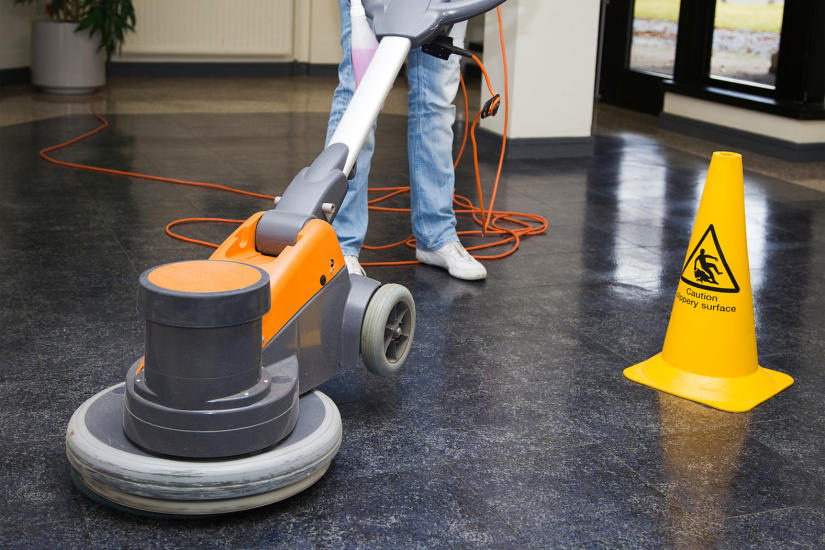
A Simple Winter Floor Cleaning Checklist for Facility Managers
You don’t need a complicated plan to get started.
Before the winter season gets busy, walk through the property and look at it from the perspective of someone entering with snowy boots.
Where does the water collect? Are the mats long enough? Does the grit stop near the entrance, or does it reach the elevators?
Then put together a routine your team can actually follow.
Before winter:
Check mat condition and placement, review floor cleaning products, inspect equipment, and identify high-risk areas.
Every morning:
Inspect entrances, remove visible dirt, check for moisture, and make sure mats are secure.
During the day:
Monitor busy entrances, respond to wet areas, and adjust cleaning based on snowfall, temperature changes, and foot traffic.
After hours:
Complete scheduled floor cleaning, remove accumulated grit, and allow suitable drying time before normal traffic resumes.
Throughout the season:
Review the results. If the lobby is consistently dirty by noon, the schedule probably needs adjusting.
It’s better to make a small change in November than spend the rest of winter dealing with the same problem.